

Place & P.Contorta
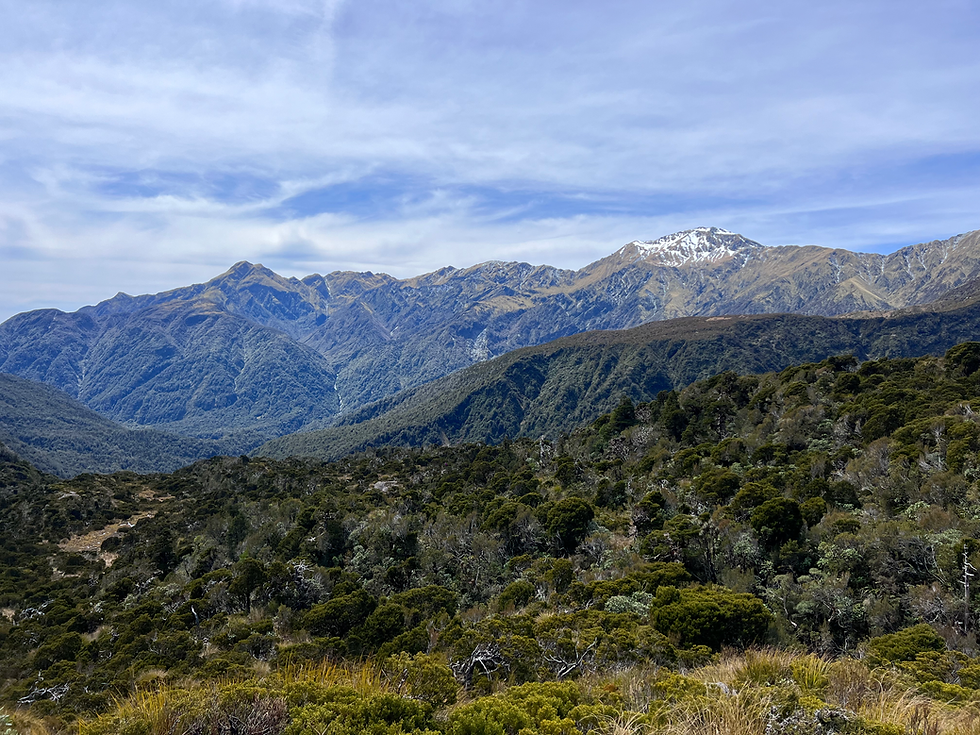
Growing up in Hawke’s Bay, I spent an embarrassingly lengthy section of my childhood thinking conifers were native. If you’d spent schoolcamp tramping ridgelines of the Kaweka ranges, perhaps you too, could be forgiven.

In 1958, the New Zealand Forestry Service (DOC’s predecessor), generously aerial seeded P.Contorta across the Kaweka Range in a bid to ‘control’ alpine erosion. Five years later, officials reported a 'satisfactory' stocking density of 620-740 seedlings per hectare. The geologically active, biodiverse, scree slopes that once defined much of the Kaweka alpine environment were soon smothered in conifers.
P.Contorta, commonly known as the ‘lodgepole pine’ is the most abundant tree in Canada’s British Columbia. Tolerant of extreme cold, nutrient stripped soil, high-alpine environments and with a prolific capacity to seed from 12-years of age, it’s no surprise that a tree which thrived in the harsh wilderness of Canada had no issue invading landscapes within New Zealand’s moderate climate. For a species attuned to extreme winters, alpine fire cycles and nutrient-poor mountain soils, New Zealand must feel like training for a marathon only to be asked to stroll around the block.

Wilding pines is the colloquial term that encompasses the self-seeded descendants of all twenty-five species of invasive conifers introduced to New Zealand. Out of all the introduced species P.Contorta is the most abundant and poses the largest threat.
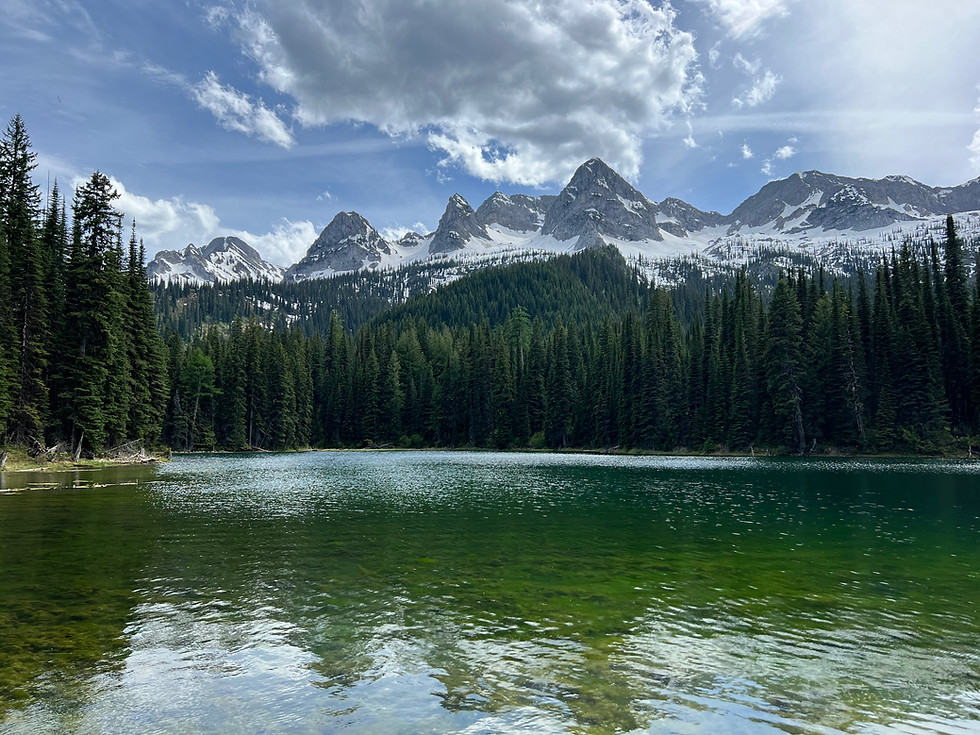
I am writing this article while on holiday in Fernie, British Columbia, a quaint ski-town located in the Canadian Rockies. The landscape is immense and mountainous, dominated by snow-capped peaks, endless rock slabs and a hearty covering of P.Contorta. Despite a career dedicated to fighting P.Contorta, witnessing these trees make light work of spaces few would venture to, here at least - I feel a sense of admiration.
The extreme seasonality of British Columbia, a region that can experience temperature swings of nearly 80°C between winter lows and summer highs, has ensured that only the toughest of species thrive. When farmers stumbled across this hardy pine, it’s little wonder it was a top-pick for shelter belts in the nutrient stripped plains of Central Otago - afterall, if P.Contorta could survive a Canadian winter, it could survive anything.

At the foundation of P.Contorta’s heartiness are several key attributions. Two of the four subspecies of P.Contorta have serotinous cones which contain seeds sealed shut with resin. In North America, natural wildfire cycles melt the resin, releasing seeds into fresh, fertile ash. In New Zealand these serotinous cones complicate control means. For dense and vast wilding spread, aerial spray operations are often the most cost effective means of control. Yet, serotinous cones are resistant to herbicide. While spray kills the tree, the cones remain viable. Ambient heat, extended drying time and old age naturally release seeds from serotinous cones in the absence of fire, resulting in re-invasion years after initial control.
Studies on P.contorta in New Zealand show an average of 74 seeds per cone, with trees capable of producing 15,000 viable seeds per year. The light seeds, crafted for wind-dispersal, can be carried over forty kilometers. For context, a P.Contorta in Clyde, could parent wildings in Cromwell!

P. contorta was introduced to New Zealand in the 1880s from small seed lots of unknown origin. By the 1950s, Crown runholders and the New Zealand Forest Service had come to view the species as a miracle cure for the high country's environmental challenges. The Government bought into the promise, subsidising shelterbelt and erosion-control plantings that would ultimately seed one of the country's most pervasive biological invasions.
P. contorta, in some regard, is a hangover from the colonial mindset. To early settlers, these pines offered a sense of home in an otherwise unfamiliar landscape. There’s irony in P.Contorta, once promised to offer stability to a landscape stripped of its native vegetation, now threatens to convert that very same pasture back to trees.
As time has passed, New Zealanders have distinguished ourselves as Kiwis, rather than mere settlers. We've developed a pride around that which is uniquely New Zealand. Farmland, our modified landscapes and open high country are pivotal to our identity. We are, after all, a world-class producer of sheep, beef and wool. Yet alongside that identity, we've fostered a deep appreciation for our wild spaces and the native flora and fauna they support - afterall, we’ve picked a flightless bird to internationally identify ourselves with.
Perhaps this explains our tendency to swerve for possums, our ability to distinguish birdsong, or the national uproar when conservation land is threatened. And while pine trees will never attract the same criticism as a possum, public perception is slowly shifting. More and more, we're recognising that there is value in keeping New Zealand as New Zealand - and not allowing our landscapes to become a relic of North America.
In Central Otago, we’re facing the harsh reality that 76% of our landscape risks being permanently lost to wilding conifers. At risk is productive farmland, water yield and biodiversity. Not to mention pines are notoriously flammable, which when coupled with the harsh heat of a central summer, threatens to convert the region into a tinder box.
P. Contorta, like all wilding conifer species, simply do not belong in New Zealand. I can't deny that the pine-clad mountains surrounding Fernie are beautiful, but the simple fact is this landscape belongs to British Columbia.
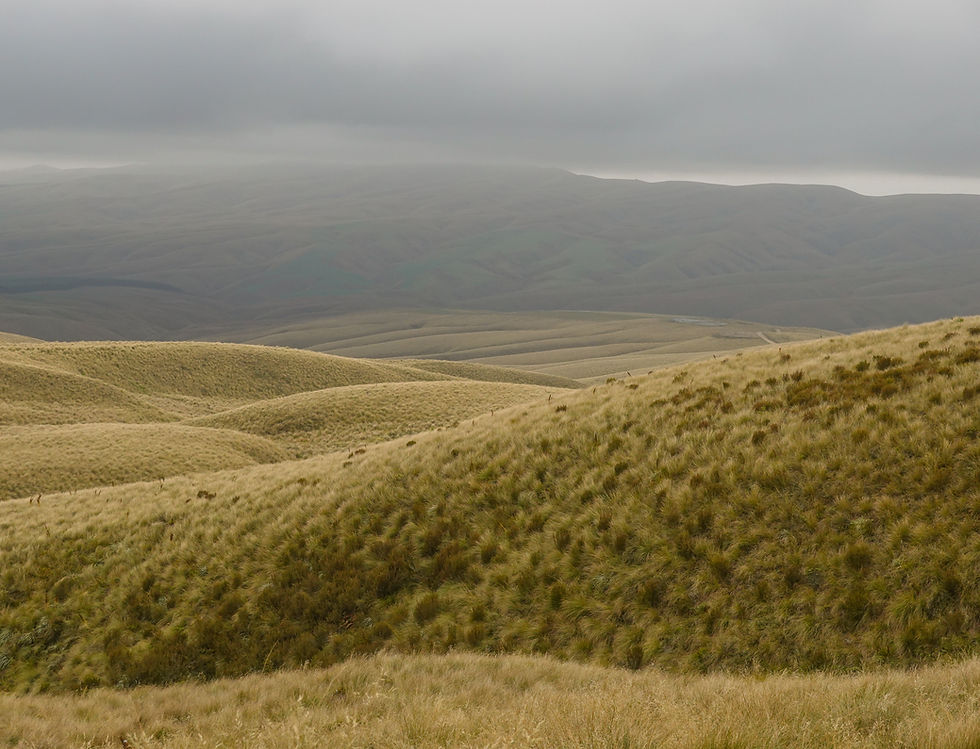
If you'd sat me down twenty years ago with pen and paper and asked me to draw a New Zealand forest, I would have sketched a pine-covered Kaweka ridgeline. I'd like to think today's children are drawing towering mīro and mataī, the golden flowers of kōwhai, the tangled mess of mingimingi, or the rolling tussocked hills of Central Otago.
Fighting wilding spread ensures future generations inherit landscapes that are unmistakably New Zealand, rather than losing them to a species that was never meant to be part of the picture.



Comments